
Yellow Medicine County Court Record Requests
Yellow Medicine County District Court handles its records through Court Administration. It also works through the statewide Minnesota court system. Before anything else, nail down the case number. Add the party or case title, and the precise item you want. Eligible public documents can be viewed or downloaded at no charge through Minnesota Court Records Online, known as MCRO. Keep one caution in mind. That remote material is unofficial. For an actual copy, go to the courthouse counter or mail a request. Use eFiling only if you are an eligible party. A nonparty should call Court Administration first. Ask for the right administrative route before touching eFS.
- Locate the court file number if possible, then name the specific order, judgment, Register of Actions, or other document sought.
- Check MCRO for an eligible public document or record detail before ordering a copy.
- Choose the request channel: Court Administration in person, mail, or eFiling for an eligible party.
- State whether a plain, certified, or exemplified copy is needed and provide a delivery method.
- Confirm the current fee and payment method when certification, exemplification, a report, or scanning is involved.
Call Yellow Medicine Court Administration at (320) 722-7002 with questions about records, calendars, terminal access, or paper files. The courthouse sits at 415 Ninth Avenue, Granite Falls, Minnesota 56241. Counter hours run Monday through Friday, 8:00 a.m. to 4:30 p.m.
Yellow Medicine County Record Request Routes
The statewide ways to request copies guidance lays out three routes: in person, by mail, and limited eFiling. A public plain copy at the counter can often be produced the same day. An older or off-site file may take longer. For mail, send the request to Yellow Medicine County District Court Administration at the courthouse address, include the case information, and pay by check or money order if payment is required. Never mail cash.
A workable request names the county, the case number, the party or case title without needless personal detail, the exact document, the copy type, the delivery method, and your contact information. An eligible party may use eFiling tied to the case number. eFS itself serves filing parties and authorized users only; it is not a public document-request portal. When a nonparty needs an administrative file number or simply cannot tell which route applies, the local office is the right first call.
The copy-request instructions set out the statewide methods that back a Yellow Medicine County request.
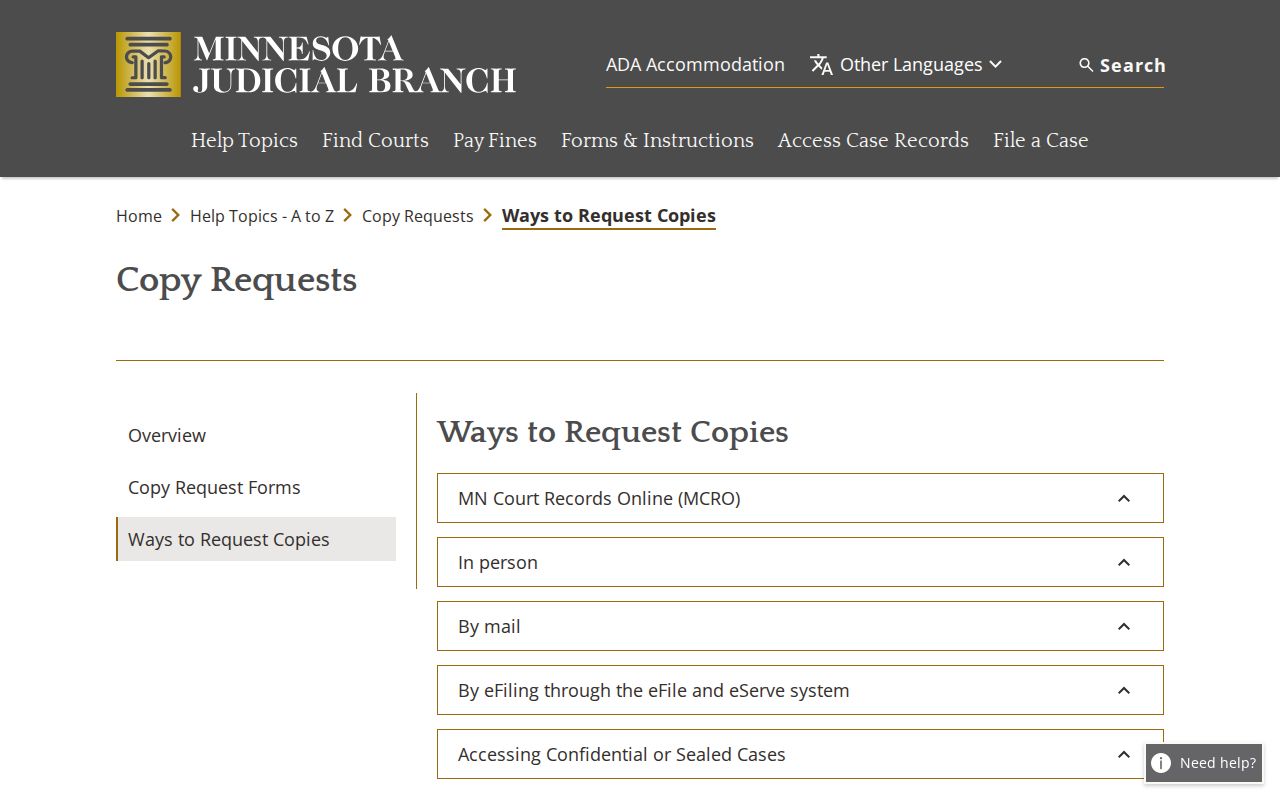
That process also draws a useful line. Asking for an existing court record is not the same as making a new filing or a general county-government data request.
Kinds of Court Records
One court file can hold several different public record products. The Register of Actions is the chronological record of court activity. A document might be a pleading, an order, a judgment, a notice, or another filing. Transcripts work differently. A transcript is the written record of a proceeding. It must be ordered from the assigned court reporter, not made at the clerk counter. Whether each item is public depends on the case type, the filing date, the security level, and the applicable rules.
- Register of Actions entries and available public documents.
- Orders, judgments, court notices, and eligible filed papers.
- Criminal, civil, probate, guardianship, conservatorship, and trust case materials when public.
- Financial, judgment, or satisfaction information when the case detail makes it available.
- Certified, exemplified, and official-report products requested from Court Administration.
Remote MCRO access is broader for many documents filed on or after July 1, 2015 in civil and major or minor criminal matters. Some older eligible orders, judgments, appellate opinions, and notices may appear there too. Family and post-adjudication paternity access is narrower, and not every public courthouse record shows up remotely.
Yellow Medicine County Plain and Certified Copies
A plain copy is an informational copy. Under the current court fee table, eligible MCRO documents and plain copies, printouts, scans, and screen prints are listed at $0. That price is subject to the record type and any applicable county-law-library charge. A certified copy carries the court's certification. It must come from the local court or another authorized records channel. The MCRO result stays unofficial even when it accurately reflects public case activity.
An exemplified copy adds another authentication layer. Request one only when the recipient requires it. Before paying anything, check the court's Yellow Medicine fee page. Copy fees and instructions can change.
Court Records: What They Contain
MCRO Case Details sorts the public record into distinct sections, though the exact view depends on the case and the access rules. A civil file can show the title, parties, attorneys, filing date, venue, judicial officer, events, documents, hearings, disposition, judgments, satisfactions, and financial entries where available. A criminal record goes further. It can also display charges, amended charges, warrants, interim conditions, bond or bail activity, and sentencing material when public.
| Case information | File number, title, type, filing date, venue, judicial officer, status, flags, and related cases. |
|---|---|
| Register of Actions | Reverse-chronological event descriptions and document index numbers. |
| Documents | Eligible remote documents linked from events; an event may have no public attachment. |
| Hearings and disposition | Scheduled or past hearings and any displayed procedural or final result. |
| Judgment and financial data | Available award, satisfaction, fees, payments, credits, or other case financial information. |
Read case records field by field. A setting is not a result, and an event title is not always a document. Public courtroom exhibits fall into yet another category; the presiding judge controls access to any exhibit.
Yellow Medicine County Mail Request Details
A mailed request works best when Court Administration can pull the file without guessing. Give them the Yellow Medicine County case number if you have it. Add the party or case title. Spell out the exact document you need. Say whether you want plain or certified copies, and how many. Add delivery instructions and your current contact information.
Certified or exemplified work has one payment rule. Make the certified check or money order out to District Court Administrator. Never send cash. For a complex request or one spanning several documents, ask the office to confirm the amount before you mail anything. The statewide illustrative form covers requester contact, case information, documents, quantity, delivery, payment, and fee-waiver fields. It helps you inventory what belongs in the request. Yellow Medicine posts no county-specific copy-request PDF of its own. Treat the illustrative form as a checklist, not a required local form.
Copy Fees and Certification
Plain copies are free under the current court fee table, but paid work is split into tiers: court-certified, exemplified, report, and special-scanning. The statutory reference for certified copies is Minnesota Statutes section 357.021. Set the official fee page to Yellow Medicine before trusting any amount. A certified copy costs $14.
| Item | Current listed fee | What it means |
|---|---|---|
| Plain copy, printout, scan, or screen print | $0 | Uncertified public copy, subject to the applicable record type and county-law-library charge. |
| Certified copy, printout, scan, or screen print | $14 | A court-certified product from an authorized records channel. |
| Exemplified plus certified copy | $28 | Certification with exemplification. |
| Exemplified plus uncertified copy | $14 | Exemplification without certification. |
| Official report | $5 for 1-50 pages; $25 per additional 50 pages or portion | Report generated from the case-management system. |
| Scanning | $25 per 50 pages or portion | Special scanning charge listed by the court. |
Yellow Medicine County District Court Administration
415 Ninth Avenue
Granite Falls, MN 56241
(320) 722-7002
Monday-Friday, 8:00 a.m. to 4:30 p.m.
Confirm the current charge with the office before mailing payment. The fee table sets the amount, and it does not promise that every record product exists for every case.
Yellow Medicine County Transcript Requests
A docket entry or court calendar can tell you a hearing happened. It cannot give you the words spoken there. The transcript is the official written record. The court reporter is the person who supplies it. Ask Court Administration for the assigned reporter or the transcript-ordering instructions. The records counter helps you identify the case and the access route. It does not produce the transcript.
Older files take patience. A paper file may sit off site. It may not be electronic yet, or it may fall under a retention rule. Court Administration can tell you whether a terminal review, mailed request, or another lawful route will reach the record.
Yellow Medicine County Electronic File Limits
Minnesota eFile and eServe handles filing and service for eligible parties and authorized filers. It is not the public viewer for a court case. Even when a party may request a record through eFiling, public access still turns on MCRO availability. The Rules of Public Access govern that too. Never assume an electronic filing will show up as a remotely viewable document right away. Do not assume it will appear at all.
Security levels matter here. A confidential or sealed filing follows its own court process. It may need a supporting form. The remote case record never overrides the court's official access decision.
Access Rules for Court Records
The Minnesota Rules of Public Access govern judicial records. Rule 4 starts from a simple premise. Records are public unless another rule, statute, court order, or authority says otherwise. Rule 8 layers on remote-access limits. That explains why a document can be public at a courthouse terminal yet missing from MCRO. The current Rules of Public Access took effect August 26, 2025. When access is denied, a written Rule 9 appeal to the State Court Administrator is available.
Key access rules:
Minnesota Rules of Public Access, Rule 4 sets the public-access presumption for judicial records unless another authority limits the record.
Minnesota Rules of Public Access, Rule 8 governs remote access and can be narrower than courthouse viewing.
Minnesota Rules of Public Access, Rule 9 provides a written administrative appeal route after an access denial.
Confidential or sealed records require the correct route. A named party may verify identity; other requesters generally need an access form such as CON100 and a judge’s permission. Adoption access may use ADO600. Juvenile delinquency and juvenile-protection files follow Minnesota Statutes sections 260B.171 and 260C.171. A Minnesota data-practices statute governs county government data, but it does not replace the judicial access rules for a District Court file.
The official Minnesota data-practices source provides the county-government context for a Yellow Medicine records request.
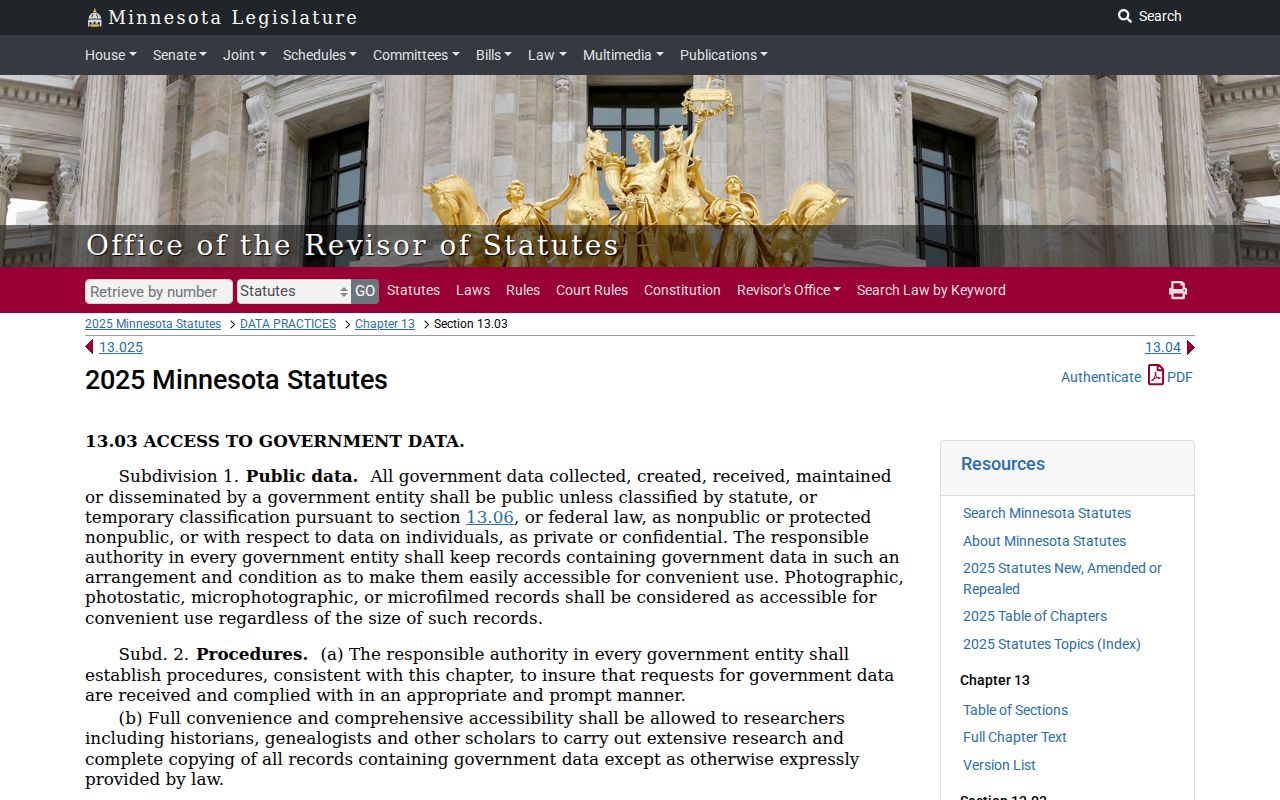
Judicial Branch rules still govern the court file. A separate county-government data question does not change that.
Yellow Medicine County Confidential Record Forms
An ordinary public-copy request will not open a sealed or confidential court file. A requester without direct-access rights generally needs the proper access form. Often a judge's order is required too. For juvenile material, availability of a legal record depends partly on whether the proceeding itself was public. Some D-16 public material may be viewable only at a courthouse terminal.
When a restricted document is missing from MCRO, call it unavailable through remote access. That is not the same as confidential. Court Administration can name the lawful next step without promising any release.
Yellow Medicine County Records at the Terminal
Public-access terminals at Minnesota courthouses can show more than remote MCRO, still bound by confidentiality, sealing, juvenile, and other rules. Bring a case number if you can. Ask whether the item is viewable at the terminal, held in a paper file, available as a plain copy, or in need of certification. The lobby calendar is the current source for courtroom scheduling, though it is no complete record index.
Terminal access lifts no restriction. It simply lets you view public court material that the remote service may not display.
Yellow Medicine County Access Appeals
Rule 9 gives you a way to fight a denial. A written appeal goes to the State Court Administrator, who must decide it promptly. Keep four things in your file. Write down the narrow question, the record you sought, the access response, and the date. The appeal only reviews the access decision itself. It cannot override a sealing order, a juvenile rule, or any other restriction on Yellow Medicine County court records. Any of those limits still stands. If your access question is complicated, Court Administration can help. It can point you to the right local record route before you draft anything.